
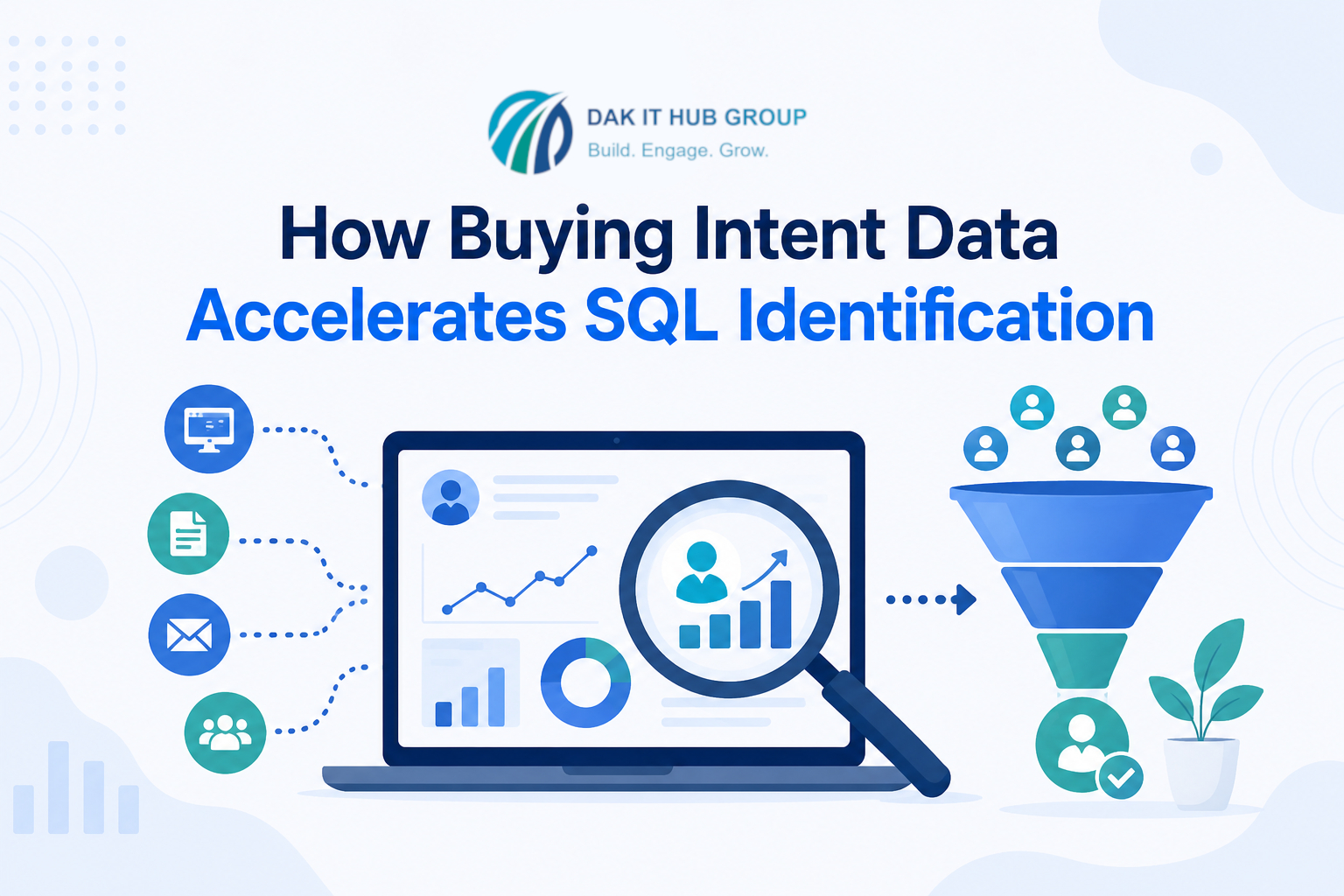
In today’s competitive B2B sales environment, generating leads is no longer enough. Businesses need to identify prospects who are genuinely interested in their products or services and are ready to engage with sales teams. This is where buying intent data has become a powerful tool for modern lead generation and qualification.
Sales Qualified Leads (SQLs) are prospects who have demonstrated a strong likelihood of making a purchase and are ready for direct sales engagement. However, identifying these high-value opportunities can be challenging when relying solely on traditional demographic or firmographic data.
Buying intent data helps businesses understand which prospects are actively researching solutions, engaging with relevant content, and showing signs of purchase readiness. By leveraging intent data, companies can accelerate SQL identification, improve sales efficiency, and generate stronger pipelines.
What Is Buying Intent Data?
Buying intent data refers to information that indicates a prospect’s interest in a specific product, service, or business solution. It is collected by tracking online activities and engagement behaviors that suggest a prospect may be considering a purchase.
Common sources of buying intent data include:
- Website visits
- Content downloads
- Webinar registrations
- Email engagement
- Search activity
- Product page visits
- Industry content consumption
- Online research behavior
These signals help businesses identify prospects who are actively exploring solutions and may be moving closer to a buying decision.
Why Traditional Lead Qualification Is No Longer Enough
For many years, lead qualification focused primarily on firmographic data such as:
- Company size
- Industry
- Revenue
- Geographic location
- Job title
While these factors remain important, they do not reveal whether a prospect is actively interested in making a purchase.
For example, a Chief Information Officer at a large enterprise may fit your ideal customer profile, but if they are not researching solutions or engaging with your content, they may not be ready for a sales conversation.
Intent data fills this gap by revealing actual buying behavior rather than simply identifying potential fit.
Identifying Prospects Earlier in the Buying Journey
One of the biggest advantages of intent data is its ability to identify opportunities before competitors.
Many buyers begin researching solutions long before contacting vendors. During this research phase, they consume content, attend webinars, read case studies, and explore industry resources.
Intent data helps businesses recognize these activities and engage prospects earlier in their decision-making process.
This proactive approach allows sales teams to establish relationships before competitors enter the conversation.
Improving Lead Scoring Accuracy
Lead scoring is a critical part of SQL identification.
Traditional lead scoring often relies on static information such as company size or job title. However, intent data adds a behavioral layer that significantly improves scoring accuracy.
Examples of intent-based scoring include:
- Visiting pricing pages
- Downloading product guides
- Attending webinars
- Requesting demos
- Engaging with multiple email campaigns
The more buying signals a prospect displays, the higher their score becomes.
This helps sales teams prioritize leads that are most likely to convert.
Enhancing Sales and Marketing Alignment
One of the common challenges in B2B organizations is the disconnect between sales and marketing teams.
Marketing may generate large volumes of leads, but sales teams often question lead quality.
Intent data creates a shared understanding of prospect readiness by providing measurable engagement indicators.
Marketing can use intent signals to nurture prospects, while sales teams can focus on leads that have demonstrated genuine interest.
This alignment improves efficiency and increases conversion rates.
Delivering More Personalized Outreach
Modern buyers expect personalized experiences.
Intent data provides valuable insights into:
- Topics prospects are researching
- Content they consume
- Products they are exploring
- Challenges they may be facing
Sales and marketing teams can use these insights to create highly relevant messaging.
For example, if a prospect frequently engages with cybersecurity-related content, outreach can focus on security challenges and solutions rather than generic messaging.
Personalized engagement often leads to higher response rates and stronger relationships.
Accelerating Sales Cycles
When sales teams engage prospects who are already demonstrating buying intent, conversations become more productive.
Instead of spending time educating completely cold prospects, sales representatives can focus on addressing specific needs and guiding prospects toward a decision.
This often results in:
- Faster qualification
- More meaningful conversations
- Shorter sales cycles
- Improved close rates
Intent data helps sales teams spend their time where it matters most.
Increasing Conversion Rates
Businesses that leverage buying intent data are better equipped to identify prospects with a higher likelihood of conversion.
By targeting prospects who are actively researching solutions and engaging with relevant content, companies can improve:
- SQL conversion rates
- Sales productivity
- Marketing ROI
- Pipeline quality
This focused approach allows organizations to maximize the value of their lead generation efforts.
Supporting Account-Based Marketing Strategies
Intent data also plays a major role in Account-Based Marketing (ABM).
ABM programs focus on targeting high-value accounts with personalized campaigns.
Intent signals help businesses determine which target accounts are actively researching relevant topics, allowing teams to prioritize outreach and tailor messaging accordingly.
This improves engagement and increases the effectiveness of ABM initiatives.
Final Thoughts
Buying intent data has transformed the way businesses identify and qualify Sales Qualified Leads. By revealing which prospects are actively researching solutions and demonstrating purchase interest, intent data helps organizations improve lead scoring, personalize outreach, accelerate sales cycles, and generate higher-quality opportunities.
Instead of relying solely on demographic information, companies can use intent signals to engage prospects at the right time with the right message.
To help businesses identify and connect with high-intent prospects, DAK IT HUB GROUP offers specialized B2B Contact Discovery Services that provide access to accurate contact information and valuable intent-based insights. By helping sales and marketing teams identify decision-makers, uncover buying signals, and prioritize outreach efforts, DAK IT HUB GROUP enables businesses to build stronger pipelines and improve SQL generation through data-driven prospecting strategies.

0 Comments