
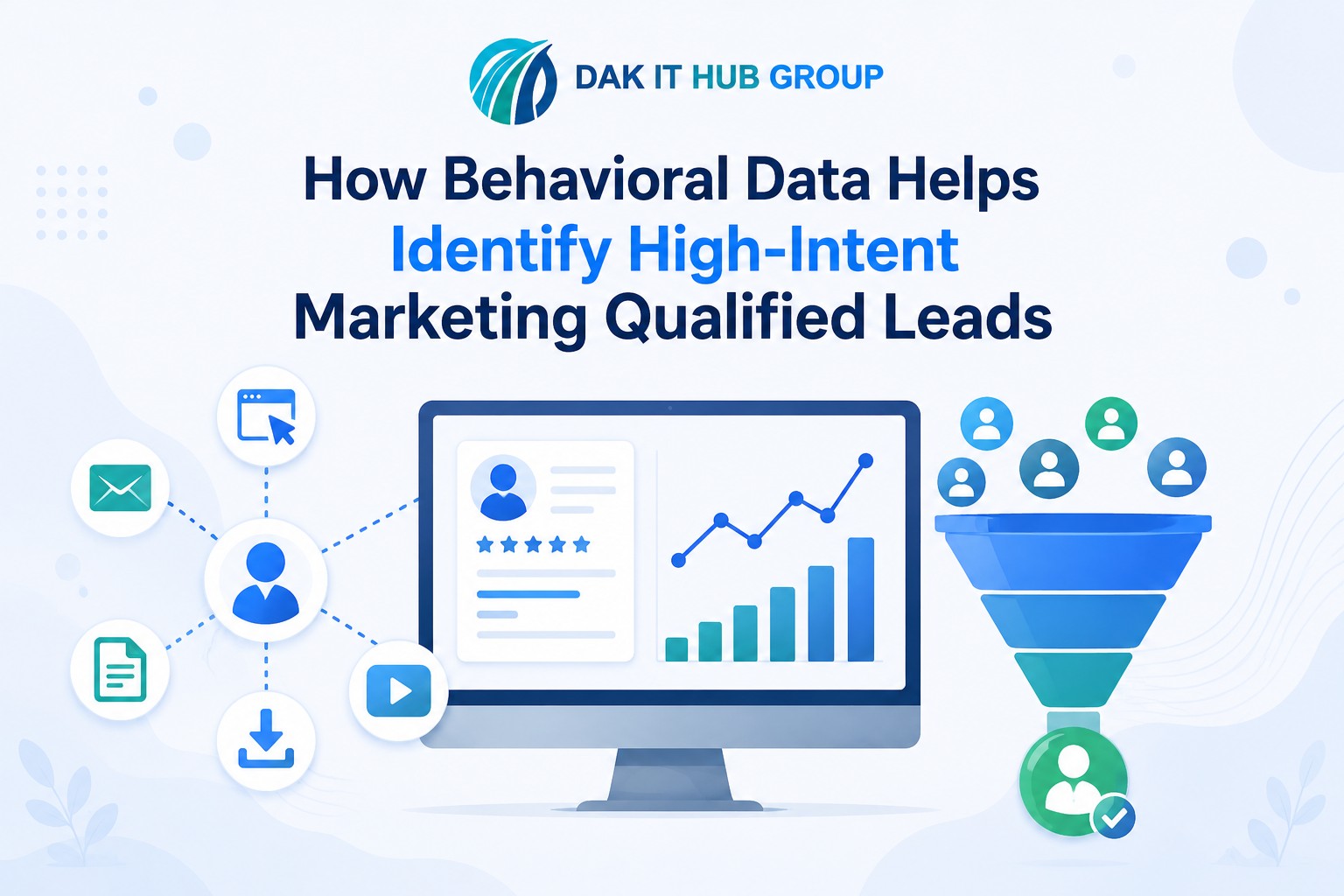
In today’s competitive B2B marketing landscape, generating leads is only part of the challenge. The real success comes from identifying which prospects are genuinely interested in your products or services and are more likely to move through the sales funnel. This is where behavioral data plays a crucial role.
Behavioral data provides valuable insights into how prospects interact with your brand across various channels. By analyzing these actions, businesses can identify high-intent Marketing Qualified Leads (MQLs) and focus their sales and marketing efforts on prospects with the greatest potential to convert.
In this blog, we’ll explore how behavioral data helps identify high-intent MQLs and why it has become an essential component of modern B2B lead generation strategies.
What Is Behavioral Data?
Behavioral data refers to information collected based on the actions prospects take when interacting with your business. Unlike demographic or firmographic data, behavioral data focuses on what people actually do.
Examples of behavioral data include:
- Website visits
- Page views
- Content downloads
- Email opens and clicks
- Webinar registrations
- Event attendance
- Form submissions
- Product demo requests
- Social media engagement
These actions provide valuable clues about a prospect’s level of interest and readiness to engage with your sales team.
Why Behavioral Data Matters in Lead Qualification
Traditional lead qualification often relies on factors such as job title, company size, industry, and location. While these attributes are important, they do not always indicate buying intent.
For example, a Chief Technology Officer from a large company may fit your ideal customer profile, but if they have never interacted with your content, they may not be actively looking for a solution.
On the other hand, a prospect who regularly visits your website, downloads multiple resources, and attends your webinars is demonstrating clear interest.
Behavioral data helps bridge this gap by revealing which leads are actively engaging with your brand.
Identifying Buying Signals
One of the biggest advantages of behavioral data is its ability to uncover buying signals.
Certain actions indicate a higher level of intent than others. For example:
Low-Intent Behaviors
- Reading a blog article
- Visiting your homepage
- Following your company on social media
Medium-Intent Behaviors
- Downloading an eBook
- Registering for a webinar
- Visiting product-related pages
High-Intent Behaviors
- Requesting a product demo
- Visiting pricing pages multiple times
- Downloading case studies
- Completing contact forms
By assigning value to different actions, businesses can better identify prospects who are closer to making a purchasing decision.
Improving Lead Scoring Models
Behavioral data is a key component of modern lead scoring systems.
Lead scoring assigns points to prospects based on their actions and engagement levels. The more relevant and meaningful the interaction, the higher the score.
For example:
- Email open: 5 points
- Content download: 15 points
- Webinar attendance: 25 points
- Demo request: 50 points
Once a lead reaches a predefined score threshold, it can be classified as a Marketing Qualified Lead and passed to the sales team for follow-up.
This approach helps ensure that sales representatives focus on leads with the highest likelihood of conversion.
Enhancing Personalization
Behavioral data also helps marketers deliver more personalized experiences.
By understanding which content prospects consume and which topics interest them, businesses can tailor communications accordingly.
Examples include:
- Sending industry-specific content
- Recommending related resources
- Delivering personalized email campaigns
- Offering relevant webinar invitations
Personalized communication increases engagement and helps move prospects further along the buyer journey.
Identifying Content Preferences
Behavioral data can reveal what types of content resonate most with prospects.
For instance, if a lead repeatedly downloads whitepapers about cybersecurity, this suggests a strong interest in that topic.
Marketing teams can use these insights to:
- Create more targeted campaigns
- Develop relevant content assets
- Improve audience segmentation
- Increase engagement rates
Understanding content preferences allows businesses to nurture leads more effectively.
Aligning Sales and Marketing Teams
Behavioral data helps improve collaboration between sales and marketing teams.
Instead of relying on assumptions, both teams can use engagement data to understand where prospects are in the buying process.
Marketing teams can identify and nurture interested prospects, while sales teams can prioritize leads showing strong intent signals.
This alignment results in:
- Better lead quality
- Faster follow-up
- Improved conversion rates
- Stronger sales pipelines
Predicting Future Buying Behavior
Advanced analytics tools can use behavioral data to predict future actions.
By analyzing patterns in prospect engagement, businesses can identify which leads are most likely to convert.
For example, prospects who attend webinars, visit pricing pages, and download case studies may share similar buying patterns.
Predictive insights allow businesses to focus resources on the most promising opportunities.
Measuring Campaign Effectiveness
Behavioral data also provides valuable feedback on marketing performance.
Businesses can track:
- Which campaigns generate engagement
- Which content drives conversions
- Which channels attract high-intent leads
These insights help marketers optimize future campaigns and improve lead generation results.
Final Thoughts
Behavioral data has become one of the most valuable tools for identifying high-intent Marketing Qualified Leads. By tracking and analyzing prospect actions, businesses can gain deeper insights into buyer interest, improve lead scoring, personalize communications, and align sales and marketing efforts.
Instead of relying solely on demographic information, organizations that leverage behavioral data can focus on prospects who are actively demonstrating interest and are more likely to convert into customers.
To help businesses build stronger sales pipelines, DAK IT HUB GROUP offers specialized B2B lead generation services that combine targeted email marketing and strategic telemarketing campaigns. By engaging prospects across multiple touchpoints, identifying intent signals, and nurturing qualified opportunities, DAK IT HUB GROUP helps sales and marketing teams generate high-quality leads and create a more predictable pipeline for business growth.



0 Comments