
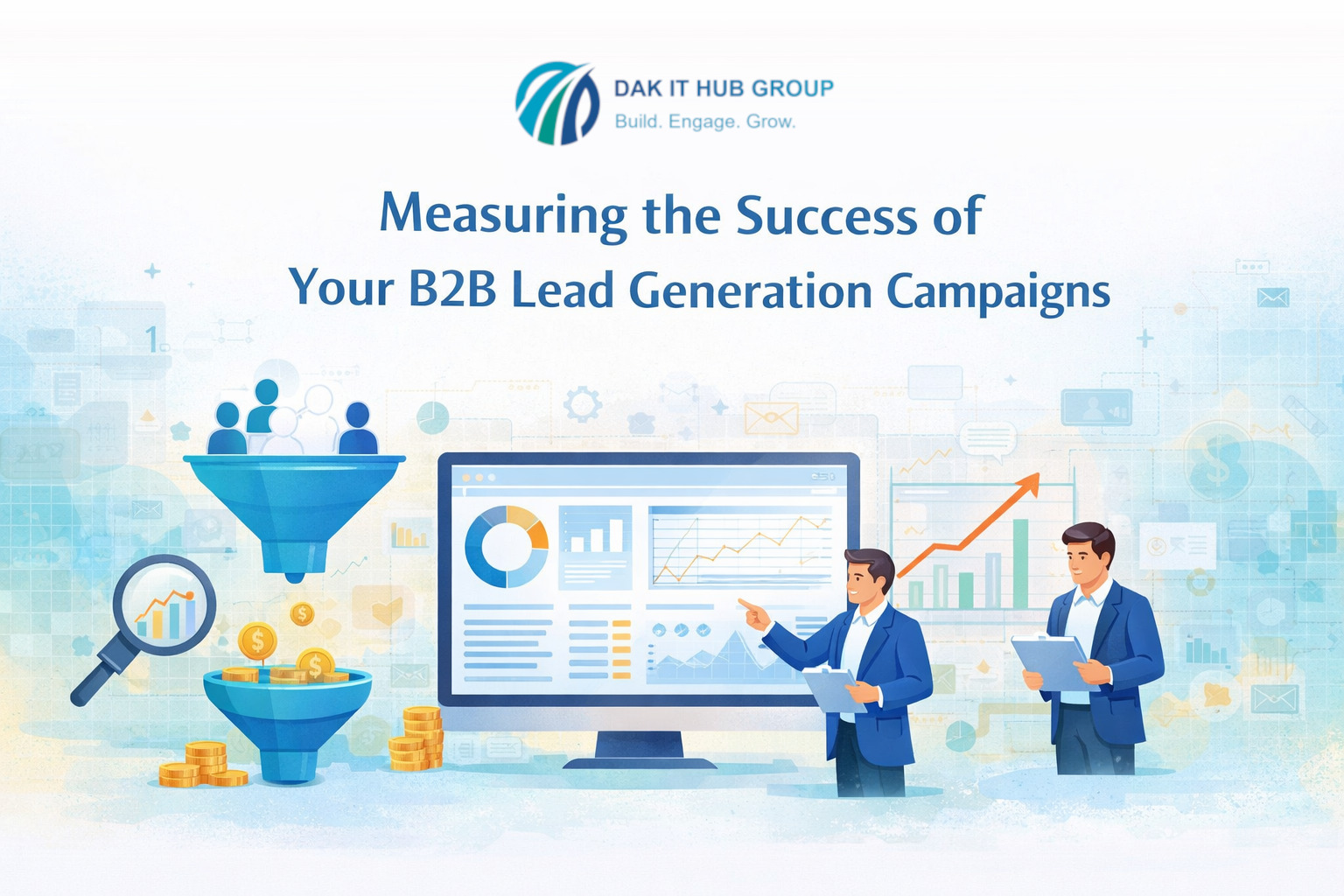
In the competitive world of B2B marketing, generating leads is only the first step toward business growth. What truly determines success is how well companies measure the performance of their lead generation campaigns. Without proper tracking and analysis, businesses may spend time and resources on strategies that do not deliver meaningful results. Measuring the success of B2B lead generation campaigns helps organizations understand what works, identify areas for improvement, and optimize their marketing efforts to generate more qualified leads.
For sales and marketing teams, having clear metrics and evaluation methods ensures that campaigns remain aligned with business goals. By analyzing campaign performance, companies can make data-driven decisions and build a stronger pipeline of potential customers.
Setting Clear Goals for Lead Generation
The first step in measuring the success of any B2B lead generation campaign is setting clear and measurable goals. These goals act as a benchmark for evaluating performance.
Some common goals include:
- Increasing the number of qualified leads
- Improving conversion rates
- Generating more sales opportunities
- Expanding the sales pipeline
- Improving return on marketing investment
When goals are clearly defined, it becomes easier to determine whether a campaign is successful or needs improvement.
Tracking Lead Volume and Lead Quality
One of the most basic indicators of campaign performance is the number of leads generated. However, lead quantity alone does not guarantee success. Businesses must also evaluate the quality of the leads they generate.
High-quality leads are those that match the company’s ideal customer profile and show genuine interest in the product or service. Tracking both lead volume and lead quality helps organizations determine whether their campaigns are attracting the right audience.
Sales teams often categorize leads into stages such as marketing qualified leads (MQLs) and sales qualified leads (SQLs). Monitoring how many leads move from one stage to another helps measure campaign effectiveness.
Monitoring Conversion Rates
Conversion rates are a critical metric in B2B lead generation. They measure the percentage of leads that move from one stage of the sales funnel to the next.
For example, companies may track:
- Website visitor to lead conversion rate
- Lead to MQL conversion rate
- MQL to SQL conversion rate
- SQL to customer conversion rate
High conversion rates indicate that the marketing message resonates with the target audience and that the leads generated are relevant to the business.
Measuring Engagement Metrics
Engagement metrics provide valuable insights into how prospects interact with marketing campaigns. These metrics help businesses understand whether their content and messaging are attracting attention.
Common engagement metrics include:
- Email open rates
- Email click-through rates
- Website visits and page views
- Webinar registrations and attendance
- Content downloads
Higher engagement levels often indicate stronger interest from potential buyers. By monitoring engagement, marketing teams can identify which campaigns and content formats perform best.
Evaluating Cost Per Lead
Another important factor in measuring campaign success is cost efficiency. Cost per lead (CPL) helps businesses understand how much they are spending to acquire each lead.
To calculate CPL, companies divide the total campaign cost by the number of leads generated. A lower cost per lead indicates that the campaign is generating results efficiently.
However, businesses should balance cost with lead quality. Sometimes, spending slightly more per lead may be worthwhile if those leads have a higher probability of converting into customers.
Analyzing Sales Pipeline Impact
Lead generation campaigns should ultimately contribute to revenue growth. Therefore, organizations must evaluate how campaigns influence the sales pipeline.
Key indicators include:
- Number of opportunities created
- Pipeline value generated from leads
- Average deal size
- Time taken to convert leads into customers
By analyzing these factors, businesses can determine whether their lead generation efforts are producing meaningful sales opportunities.
Using Data for Continuous Improvement
Successful B2B marketers understand that lead generation is an ongoing process. Regular analysis of campaign data allows businesses to identify strengths and weaknesses in their strategies.
Marketing teams can use these insights to:
- Refine audience targeting
- Improve messaging and content
- Optimize marketing channels
- Enhance lead nurturing strategies
Continuous improvement helps companies maximize the effectiveness of their campaigns and achieve better results over time.
Leveraging Technology and Analytics Tools
Modern marketing tools make it easier than ever to track campaign performance. CRM platforms, marketing automation tools, and analytics dashboards provide real-time insights into lead generation activities.
These technologies allow businesses to track leads throughout the entire buyer journey, from initial engagement to final conversion. With the help of these tools, organizations can gain deeper visibility into their marketing and sales performance.
How DAK IT HUB GROUP Supports B2B Lead Generation Success
For many organizations, managing and measuring lead generation campaigns internally can be challenging. This is where professional B2B lead generation partners can provide significant value.
DAK IT HUB GROUP helps sales and marketing professionals generate and nurture high-quality leads through its specialized B2B lead generation services. Using targeted email marketing campaigns and tele-calling outreach, the company helps businesses connect with relevant decision-makers and drive meaningful engagement. Their structured approach ensures that companies receive qualified prospects who are more likely to convert into customers, while also supporting marketing teams with insights that help improve overall campaign performance. By combining strategic outreach with reliable data and communication channels, DAK IT HUB GROUP helps businesses strengthen their lead generation efforts and build a more effective sales pipeline.

0 Comments