
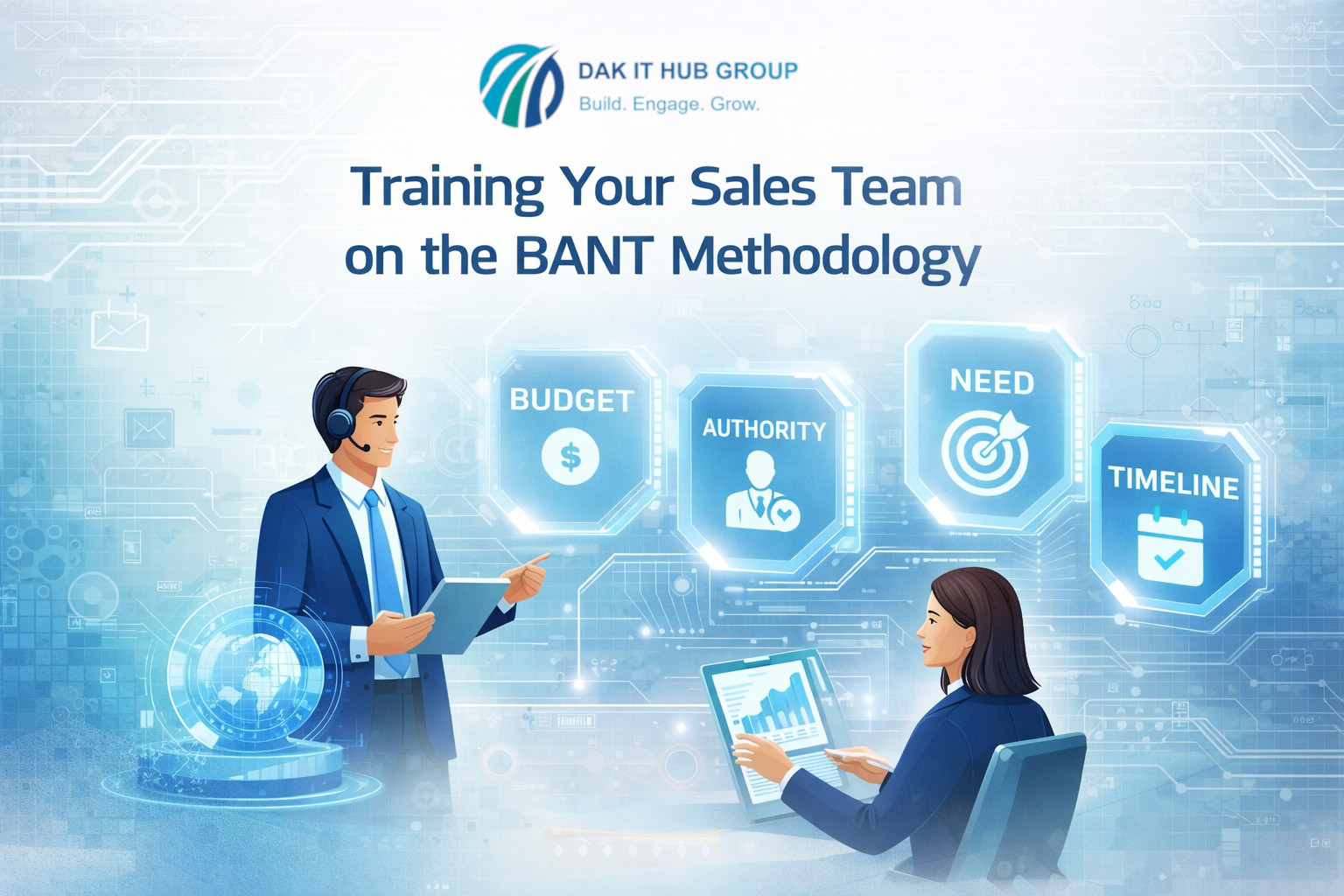
In the competitive world of B2B sales, identifying the right prospects is critical for success. Sales teams often interact with many potential customers, but not every lead is ready to buy. This is where the BANT methodology becomes extremely valuable. BANT stands for Budget, Authority, Need, and Timeline, and it is one of the most widely used frameworks for qualifying leads in B2B sales.
By training sales teams to effectively apply the BANT framework, organizations can focus their efforts on high-potential prospects, improve conversion rates, and shorten the sales cycle. Proper training ensures that sales representatives know how to ask the right questions, understand customer requirements, and move qualified prospects through the sales funnel more efficiently.
Understanding the BANT Framework
Before sales teams can use BANT effectively, they must clearly understand its four key components:
Budget – Determines whether the prospect has the financial resources to invest in the solution. Sales representatives should understand the prospect’s spending capacity and budget planning process.
Authority – Identifies whether the person being contacted has the decision-making power. In many B2B organizations, multiple stakeholders may be involved in purchasing decisions.
Need – Evaluates whether the prospect truly requires the product or service. Understanding the prospect’s challenges helps sales teams position their solutions effectively.
Timeline – Determines when the prospect plans to make a purchasing decision. Knowing the timeline helps sales teams prioritize leads and plan follow-ups.
Training sales teams to analyze these four elements allows businesses to focus on opportunities that are most likely to convert.
Educating Sales Teams on Effective Questioning
One of the most important aspects of BANT training is teaching sales representatives how to ask the right questions. Rather than simply pitching a product or service, sales teams should focus on having meaningful conversations with prospects.
For example, instead of directly asking about budget, a sales representative might ask:
- “How are you currently addressing this challenge?”
- “Have you allocated a budget for solving this issue?”
- “What factors will influence your purchasing decision?”
These types of open-ended questions encourage prospects to share useful information. Training sessions should include examples of effective questions that help sales teams gather insights related to budget, authority, need, and timeline.
Role-Playing and Practical Training
Sales training becomes more effective when it includes practical exercises. Role-playing scenarios allow sales representatives to practice conversations with potential customers and improve their communication skills.
During these exercises, team members can simulate real-world sales situations such as:
- Qualifying a new lead
- Identifying decision-makers in an organization
- Understanding a prospect’s business challenges
- Handling objections during the qualification process
Role-playing builds confidence and helps sales teams learn how to apply the BANT methodology naturally during conversations.
Using CRM and Data for Better Qualification
Modern sales teams rely heavily on technology and data to manage leads. Integrating BANT qualification into customer relationship management (CRM) systems allows teams to track important details about each prospect.
Sales representatives can record information such as:
- Budget availability
- Key decision-makers
- Business challenges and requirements
- Expected purchasing timelines
This structured approach ensures that valuable information is easily accessible and helps both sales and marketing teams prioritize leads more effectively.
Aligning Sales and Marketing Teams
For BANT to work effectively, there must be strong collaboration between sales and marketing teams. Marketing teams typically generate leads through various channels such as email campaigns, webinars, or content marketing.
However, sales teams are responsible for qualifying these leads and determining whether they meet BANT criteria.
By aligning their strategies, marketing and sales teams can:
- Define clear criteria for qualified leads
- Improve lead scoring processes
- Deliver more relevant prospects to sales teams
- Increase the efficiency of the sales pipeline
Regular communication between both teams ensures that lead generation and qualification processes remain consistent.
Continuous Learning and Performance Monitoring
Training on the BANT methodology should not be a one-time event. Sales leaders should continuously evaluate how effectively the team applies the framework in real interactions with prospects.
Performance reviews can include:
- Monitoring qualified lead conversion rates
- Evaluating the quality of sales conversations
- Reviewing CRM data for completeness and accuracy
- Providing coaching and feedback to sales representatives
Continuous training and improvement help sales teams refine their qualification skills and achieve better results over time.
The Importance of Qualified Leads in B2B Sales
A well-trained sales team that understands BANT can significantly improve business outcomes. By focusing on qualified leads, companies can avoid wasting time on prospects who are unlikely to convert.
Instead, sales teams can invest their energy in building relationships with prospects who have a genuine need, the authority to make decisions, and a realistic timeline for purchasing. This leads to more productive conversations, stronger sales pipelines, and higher conversion rates.
How DAK IT HUB GROUP Supports BANT-Based Lead Generation
For many organizations, consistently generating qualified BANT leads can be challenging. This is where experienced B2B lead generation partners play an important role. DAK IT HUB GROUP helps sales and marketing professionals identify and connect with prospects that meet BANT qualification criteria through its specialized B2B lead generation services. By combining targeted email marketing campaigns with strategic tele-calling outreach, the company engages with potential decision-makers, gathers valuable qualification insights, and helps businesses connect with prospects who have the right budget, authority, need, and timeline. This structured approach supports organizations in building stronger sales pipelines and enables their sales teams to focus on high-quality opportunities that are more likely to convert into customers.
0 Comments