
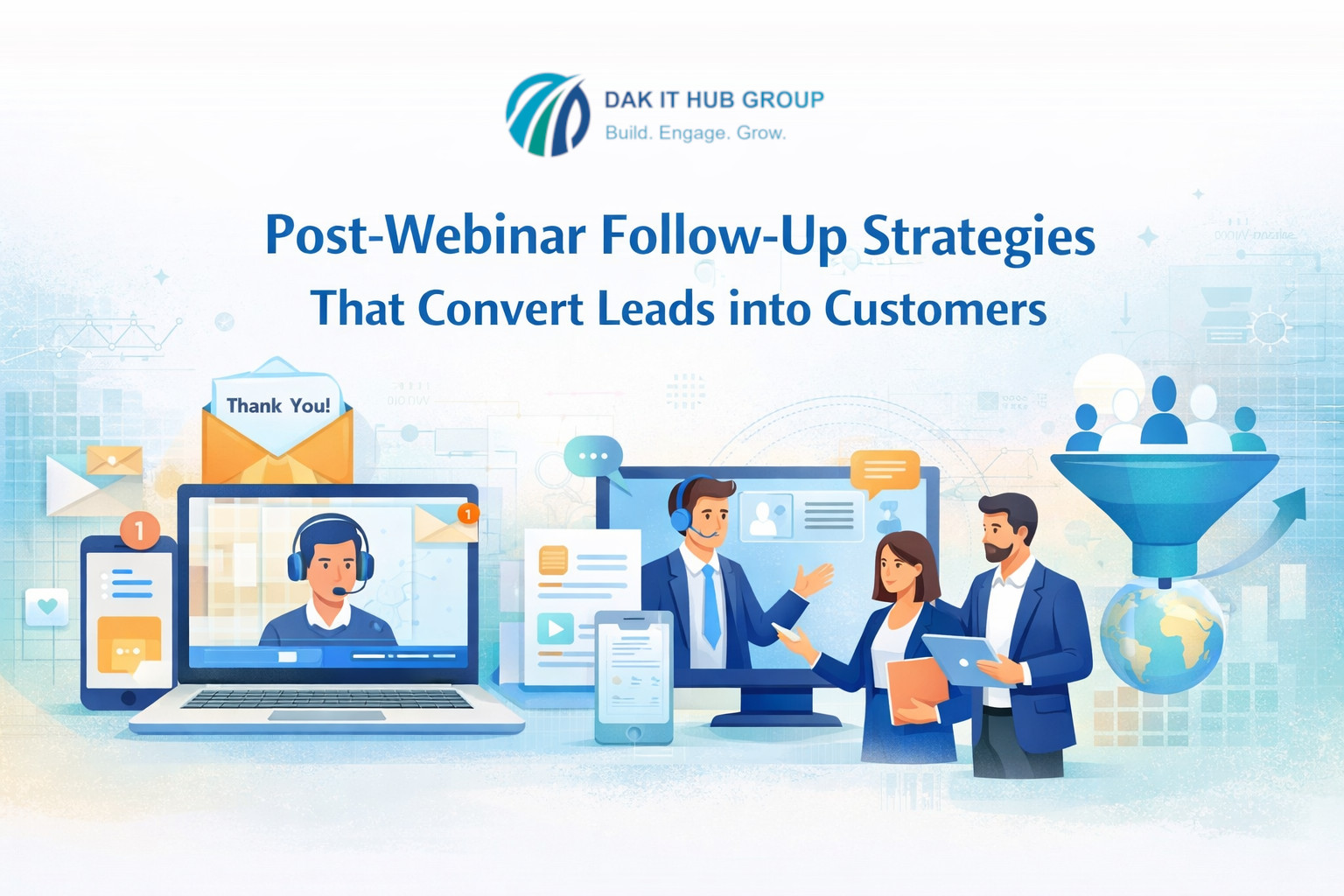
Webinars have become one of the most effective tools for B2B lead generation. They allow companies to educate prospects, demonstrate expertise, and engage directly with potential buyers. However, the real value of a webinar is not just in the number of attendees—it lies in what happens after the event.
Many companies make the mistake of ending their engagement once the webinar is over. Without a strong follow-up strategy, even highly interested attendees may forget about the discussion or move on to other priorities.
A well-planned post-webinar follow-up strategy helps businesses nurture leads, build stronger relationships, and convert webinar attendees into customers. In this blog, we will explore practical strategies that can help sales and marketing teams maximize the impact of their webinars.
Start with a Prompt Thank-You Email
The first step in post-webinar follow-up is sending a thank-you email shortly after the event. This email should be sent within 24 hours of the webinar while the topic is still fresh in the attendees’ minds.
A good thank-you email should include:
- A brief message appreciating their participation
- A link to the webinar recording
- A copy of the presentation or key resources
- A clear call-to-action such as scheduling a meeting or downloading additional content
This email keeps the conversation going and encourages further engagement.
Segment Attendees for Better Follow-Ups
Not all webinar attendees have the same level of interest. Some may be ready to explore solutions immediately, while others may still be in the research phase.
Segmenting webinar leads helps you deliver more relevant follow-up communication.
Common segments include:
- Highly engaged attendees who asked questions or interacted during the webinar
- Attendees who watched but did not engage
- Registrants who did not attend
Highly engaged participants can be contacted directly by the sales team. Others can be nurtured with additional educational content until they are ready to move forward.
Share Additional Valuable Content
Webinars often introduce a topic but cannot cover every detail. Follow-up communication provides an opportunity to share more helpful resources.
You can send:
- Case studies related to the webinar topic
- Industry reports or whitepapers
- Blog articles with deeper insights
- Product demonstration videos
Providing relevant content positions your company as a trusted advisor and helps prospects move further along the buying journey.
Use Personalized Follow-Up Messages
Personalization plays a major role in effective follow-ups. Instead of sending generic emails, tailor your messages based on the attendee’s interests and behavior.
For example, if someone asked a question during the webinar, you can send a personalized email addressing their specific concern.
A message like:
“Thank you for your question during the webinar about improving lead conversion rates. Here is a case study that explains how companies are solving this challenge.”
This type of communication feels more relevant and increases the chances of engagement.
Encourage One-on-One Conversations
Webinars generate interest, but meaningful business discussions usually happen through personal interactions.
One effective follow-up strategy is to invite attendees to schedule a one-on-one consultation or product demonstration.
You can include a call-to-action such as:
- “Book a strategy session with our expert.”
- “Schedule a personalized demo.”
- “Speak with our team to explore solutions.”
These conversations help the sales team understand the prospect’s needs and identify opportunities for collaboration.
Use Tele-Calling for High-Potential Leads
For highly engaged leads, a direct phone call can be very effective. A short follow-up call allows sales representatives to:
- Thank the attendee personally
- Ask about their key takeaways from the webinar
- Understand their current challenges
- Offer relevant solutions
Phone conversations often create stronger connections compared to email alone. They also provide immediate feedback on the prospect’s level of interest.
Nurture Long-Term Leads
Not every webinar attendee will be ready to buy immediately. Some prospects may need weeks or months before making a decision.
For these leads, companies should implement lead nurturing campaigns that provide regular value.
This may include:
- Educational email sequences
- Invitations to future webinars
- Industry insights and updates
- Helpful guides and resources
Consistent communication keeps your brand top-of-mind until the prospect is ready to take the next step.
Measure the Effectiveness of Your Follow-Up Strategy
Tracking performance metrics is essential to improving post-webinar follow-ups.
Key metrics to monitor include:
- Email open and click-through rates
- Meeting or demo bookings
- Lead conversion rates
- Sales opportunities generated
Analyzing these metrics helps sales and marketing teams understand what works best and refine their follow-up strategies for future webinars.
Final Thoughts
Webinars are powerful tools for generating B2B leads, but their true impact depends on what happens after the event. A strong post-webinar follow-up strategy ensures that the interest generated during the webinar turns into meaningful conversations and business opportunities.
By sending timely follow-up emails, segmenting leads, sharing relevant content, and engaging prospects through personalized communication, businesses can significantly improve their chances of converting webinar leads into customers.
To support companies in maximizing webinar outcomes, DAK IT HUB GROUP offers comprehensive B2B webinar and lead generation services. Their team helps sales and marketing professionals manage effective post-webinar follow-ups through targeted email marketing campaigns and tele-calling services. By combining structured follow-up strategies with direct engagement, DAK IT HUB GROUP helps businesses nurture webinar leads, build stronger relationships with prospects, and convert interest into real sales opportunities.
0 Comments