
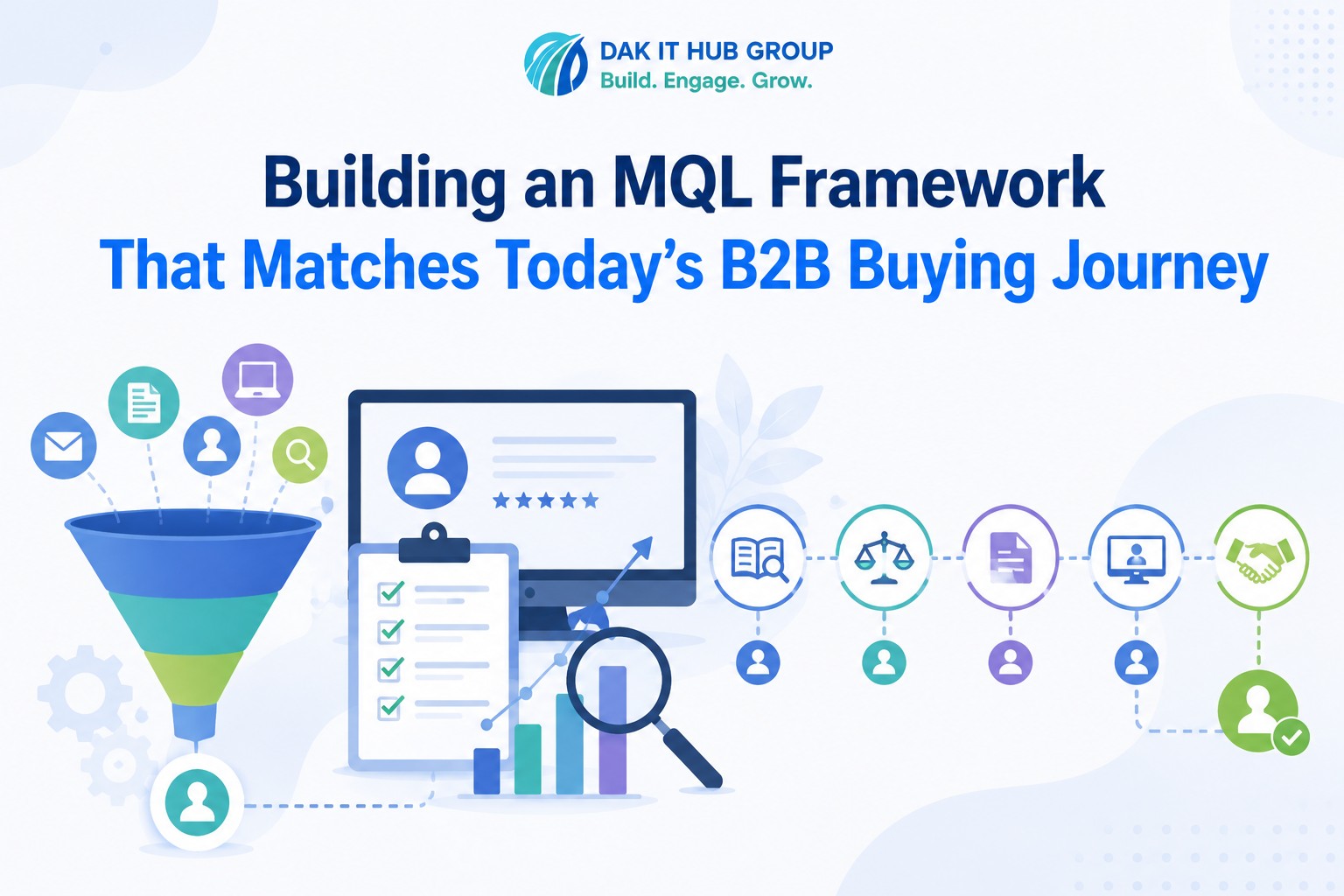
Generating Marketing Qualified Leads (MQLs) is one of the most important goals for B2B sales and marketing teams. However, today’s buyers follow a very different purchasing journey than they did a few years ago. Before speaking with a sales representative, they research solutions online, compare vendors, read blogs, attend webinars, download resources, and interact with brands through multiple digital channels.
Because of these changes, businesses need an MQL framework that reflects modern buyer behavior. Instead of qualifying leads based on a single interaction, companies should evaluate multiple engagement signals to identify prospects who are genuinely interested in their products or services.
In this blog, we’ll explore how to build an MQL framework that matches today’s B2B buying journey and helps businesses generate better-quality leads.
What Is an MQL Framework?
A Marketing Qualified Lead (MQL) framework is a structured process that helps marketing teams identify prospects who have shown enough interest to be passed to the sales team.
Rather than sending every lead directly to sales, an MQL framework uses predefined criteria to determine which prospects are most likely to become customers.
A strong MQL framework improves collaboration between marketing and sales while ensuring that sales representatives spend their time on qualified opportunities.
Understand the Modern Buyer Journey
Today’s B2B buyers rarely make quick purchasing decisions. Instead, they move through several stages before contacting a vendor.
These stages often include:
- Learning about a business challenge
- Researching possible solutions
- Comparing vendors
- Reading case studies
- Downloading whitepapers
- Attending webinars
- Requesting product information
Each interaction provides valuable information about the buyer’s level of interest.
Your MQL framework should account for these different touchpoints instead of relying on a single activity.
Define Your Ideal Customer Profile (ICP)
Every successful MQL framework begins with a clear Ideal Customer Profile.
Marketing teams should identify characteristics such as:
- Industry
- Company size
- Geographic location
- Revenue
- Business type
- Job function
- Decision-making role
Leads that closely match your ideal customer profile are more likely to become qualified sales opportunities.
Combining buyer fit with engagement creates stronger MQLs.
Use Behavioral Engagement Signals
Modern lead qualification depends heavily on behavioral data.
Instead of simply tracking form submissions, businesses should monitor activities such as:
- Blog visits
- Product page views
- Whitepaper downloads
- Webinar registrations
- Email opens
- Email clicks
- Case study downloads
- Demo requests
The more meaningful interactions a prospect has with your content, the stronger their buying intent becomes.
Behavioral scoring provides a more accurate picture of buyer readiness.
Implement Lead Scoring
Lead scoring helps prioritize prospects based on both demographic information and engagement.
For example:
- Downloading an eBook: 10 points
- Attending a webinar: 20 points
- Visiting pricing pages: 25 points
- Requesting a demo: 40 points
- Opening multiple marketing emails: 15 points
Businesses can define an MQL threshold based on total points.
Once a lead reaches that score, it becomes ready for sales follow-up.
Lead scoring improves consistency and reduces guesswork.
Align Sales and Marketing Teams
An effective MQL framework requires close collaboration between marketing and sales.
Both teams should agree on:
- MQL qualification criteria
- Lead scoring rules
- Handoff process
- Follow-up timelines
- Feedback mechanisms
Regular communication helps marketing understand which MQLs convert into customers and allows continuous improvement of the framework.
Strong alignment leads to higher conversion rates and shorter sales cycles.
Personalize Lead Nurturing
Not every prospect becomes an MQL immediately.
Many buyers need ongoing education before making a purchasing decision.
Personalized nurturing campaigns help maintain engagement through:
- Educational emails
- Industry reports
- Case studies
- Blog content
- Webinar invitations
- Product updates
Providing valuable content at each stage of the buying journey builds trust and encourages prospects to move toward becoming qualified leads.
Measure and Improve Your Framework
An MQL framework should be reviewed regularly.
Track key performance indicators such as:
- Number of MQLs generated
- MQL-to-SQL conversion rate
- Email engagement
- Webinar participation
- Sales acceptance rate
- Opportunity creation
- Revenue generated from MQLs
Analyzing these metrics helps businesses identify areas for improvement and optimize lead qualification over time.
Leverage Marketing Automation
Marketing automation platforms make it easier to manage modern MQL frameworks.
Automation can:
- Score leads automatically
- Trigger personalized email campaigns
- Track website behavior
- Notify sales teams when leads qualify
- Segment prospects based on interests
Automated workflows improve efficiency while ensuring that no qualified lead is overlooked.
Final Thoughts
Building an MQL framework that matches today’s B2B buying journey requires more than collecting contact information. Businesses must understand buyer behavior, combine demographic and behavioral data, implement lead scoring, personalize nurturing, and maintain strong alignment between marketing and sales. A modern MQL framework helps identify prospects with genuine buying interest, improves conversion rates, and creates a stronger, more predictable sales pipeline.
To help businesses generate high-quality Marketing Qualified Leads, DAK IT HUB GROUP offers professional B2B lead generation services that combine targeted email marketing and strategic telemarketing campaigns. By engaging the right audience with personalized content, nurturing prospects throughout the buying journey, and qualifying leads based on meaningful engagement, DAK IT HUB GROUP helps businesses deliver sales-ready MQLs that strengthen pipelines and support long-term business growth.
0 Comments