
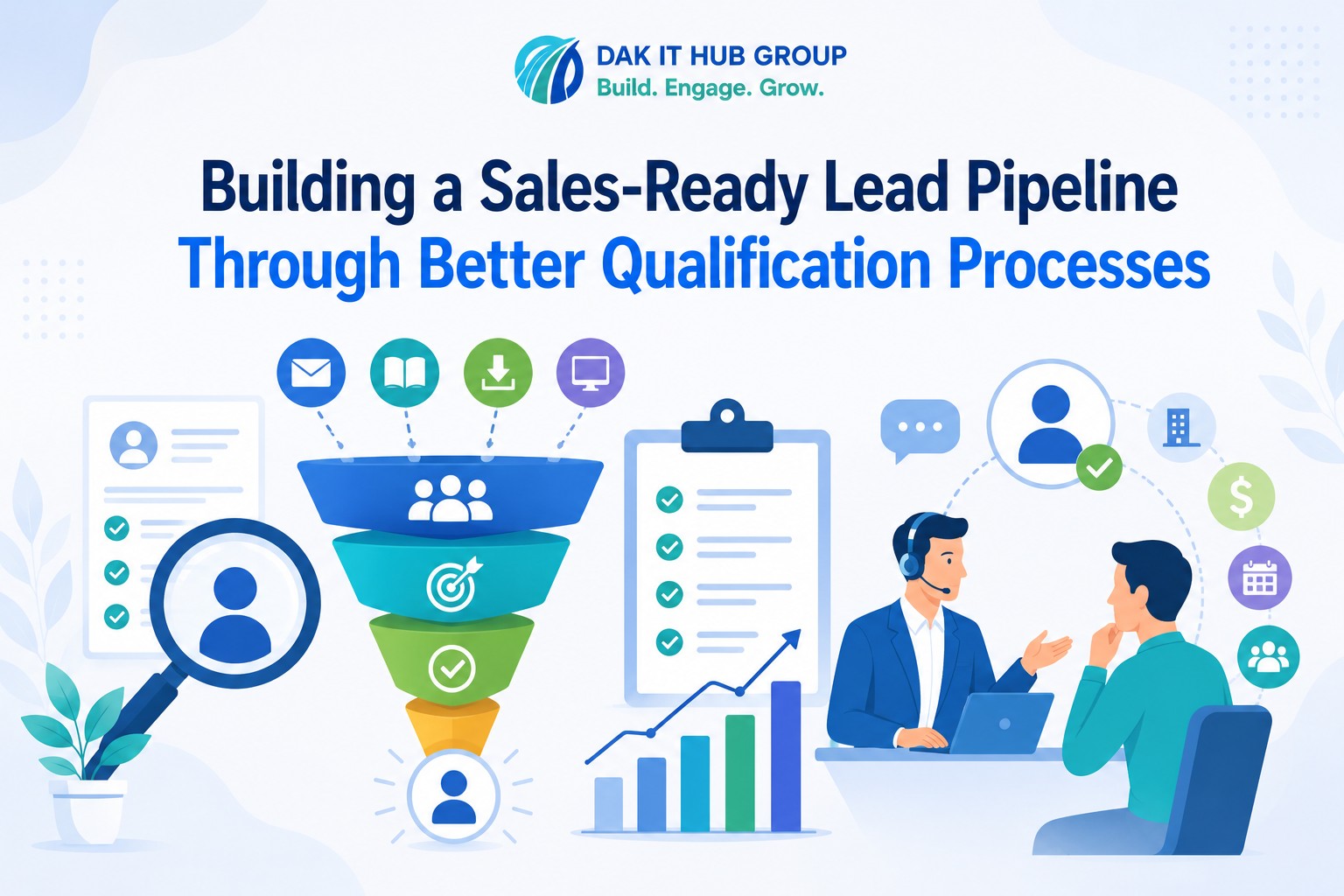
A strong B2B sales pipeline is not simply about generating a large number of leads. It is about generating the right leads and making sure they are properly qualified before they reach the sales team. When sales representatives spend too much time following up with prospects who have little interest, no budget, or no authority to make a decision, productivity suffers and sales cycles become longer.
This is why an effective lead qualification process is essential for building a sales-ready pipeline. By using clear qualification criteria, behavioral signals, buyer information, and consistent follow-up processes, businesses can identify prospects that are more likely to become customers.
For B2B organizations, better qualification creates a stronger connection between marketing and sales. Marketing can focus on generating relevant prospects, while sales can concentrate on opportunities with genuine buying potential.
What Makes a Lead Sales-Ready?
A sales-ready lead is a prospect who has demonstrated enough interest and fit to justify direct sales engagement.
Several factors can help determine whether a prospect is ready:
- They match the company’s ideal customer profile.
- They have a relevant business need.
- They have shown interest in the company’s solution.
- They have influence or authority in the buying process.
- They have a potential purchasing timeframe.
- They have the resources or budget required for the solution.
Not every lead needs to meet every condition immediately. However, the more relevant signals a prospect demonstrates, the more valuable the opportunity becomes for the sales team.
Start With a Clear Ideal Customer Profile
Better qualification starts before a lead enters the pipeline.
Businesses should clearly define their Ideal Customer Profile (ICP) based on characteristics such as industry, company size, location, revenue, technology requirements, and business needs.
The ICP should also identify the types of professionals who are likely to influence purchasing decisions.
For example, a technology company selling enterprise software may target CIOs, IT directors, operations leaders, procurement professionals, and other relevant stakeholders.
Having a clear ICP prevents marketing and sales teams from spending time on prospects that are unlikely to become customers.
Create Consistent Qualification Criteria
Sales and marketing teams should agree on what makes a lead qualified.
Without common criteria, marketing may consider a lead qualified simply because someone downloaded a whitepaper, while sales may expect evidence of an active business requirement.
Qualification criteria can include:
- Company fit
- Job title
- Business need
- Level of engagement
- Buying authority
- Budget availability
- Expected timeline
- Previous interactions with the company
Clear criteria create consistency and make the sales handoff much more effective.
Use Lead Scoring to Prioritize Opportunities
Lead scoring can help businesses rank prospects according to their level of interest and fit.
A prospect may receive points for activities such as:
- Opening marketing emails
- Clicking links
- Downloading content
- Attending webinars
- Visiting product pages
- Requesting information
- Responding to outreach
Firmographic information can also contribute to the score.
For example, a senior decision-maker at a target company who repeatedly engages with product-related content may receive a higher score than a contact with limited engagement.
Lead scoring helps sales teams prioritize prospects instead of treating every lead equally.
Look Beyond a Single Interaction
One of the biggest mistakes in lead qualification is relying on a single activity.
A prospect downloading an eBook does not necessarily mean they are ready to buy. Similarly, attending a webinar does not automatically make someone sales-ready.
Sales and marketing teams should look for multiple signals.
For example, a prospect may download a report, click follow-up emails, visit a service page, and then respond to a sales call. Together, these activities provide much stronger evidence of buying interest.
A combination of behavioral and business information creates a more reliable qualification process.
Qualify the Buying Committee
Modern B2B purchases often involve multiple stakeholders.
A lead may have a genuine need but may not be the final decision-maker. Another person may control the budget, while IT, procurement, finance, or operations may also influence the purchase.
Therefore, qualification should identify the broader buying group where possible.
Sales teams should understand:
- Who has decision-making authority?
- Who influences the purchase?
- Who controls the budget?
- Who will use the solution?
- Who needs to approve the final decision?
Understanding the buying committee improves sales conversations and reduces surprises later in the sales cycle.
Combine Email Marketing and Telemarketing
Different prospects respond to different types of communication.
Email marketing provides an effective way to introduce solutions, share educational content, and nurture prospects over time. Engagement with these emails can provide useful qualification signals.
Telemarketing adds a personal layer to the process. A trained representative can speak directly with prospects, understand their challenges, ask qualification questions, and determine whether there is a genuine business opportunity.
Combining email marketing with telemarketing creates a more complete qualification process.
Establish a Strong Marketing-to-Sales Handoff
A qualified lead can lose value if the handoff between marketing and sales is poorly managed.
Marketing should provide sales representatives with useful information about the prospect, such as:
- Company details
- Contact information
- Engagement history
- Content downloaded
- Business requirements
- Qualification information
- Recommended next step
Sales should also provide feedback to marketing about lead quality.
This two-way communication helps both teams continuously improve their processes.
Nurture Leads That Are Not Ready
Not every prospect will be ready for a sales conversation immediately.
Instead of discarding these leads, businesses can place them into appropriate nurturing campaigns.
Educational emails, industry insights, case studies, webinars, and other relevant content can keep prospects engaged until their needs become more urgent.
A lead that is not sales-ready today may become a valuable opportunity several months later.
Measure Qualification Performance
Businesses should regularly measure whether their qualification process is producing results.
Important metrics include:
- MQL-to-SQL conversion rate
- SQL-to-opportunity conversion rate
- Lead acceptance rate
- Appointment rate
- Sales cycle length
- Opportunity conversion rate
- Revenue generated from qualified leads
These metrics help identify weaknesses in the qualification process.
For example, if marketing generates a large number of MQLs but very few become SQLs, the qualification criteria may need to be improved.
Keep Improving the Process
Buyer behavior changes over time, so qualification processes should not remain static.
Sales and marketing teams should regularly review which lead characteristics and behaviors are associated with successful opportunities. They can then adjust scoring models, qualification questions, targeting criteria, and nurturing campaigns.
Continuous improvement ensures that the sales team receives leads that are increasingly relevant and valuable.
Final Thoughts
Building a sales-ready lead pipeline requires more than generating a high volume of contacts. Businesses need a structured qualification process that combines customer fit, engagement, buying intent, authority, need, budget, and timing. By using consistent qualification criteria, lead scoring, multi-touch engagement, buying committee analysis, and strong sales-marketing collaboration, organizations can reduce wasted sales effort and create a healthier pipeline of genuine opportunities.
DAK IT HUB GROUP’s B2B lead generation services help sales and marketing professionals generate Sales Qualified Leads (SQLs) through targeted email marketing and telemarketing services. By identifying relevant prospects, engaging them with personalized outreach, and qualifying their interest and business requirements through structured conversations, DAK IT HUB GROUP helps businesses deliver more sales-ready leads to their teams and build stronger, more consistent sales pipelines.
0 Comments