
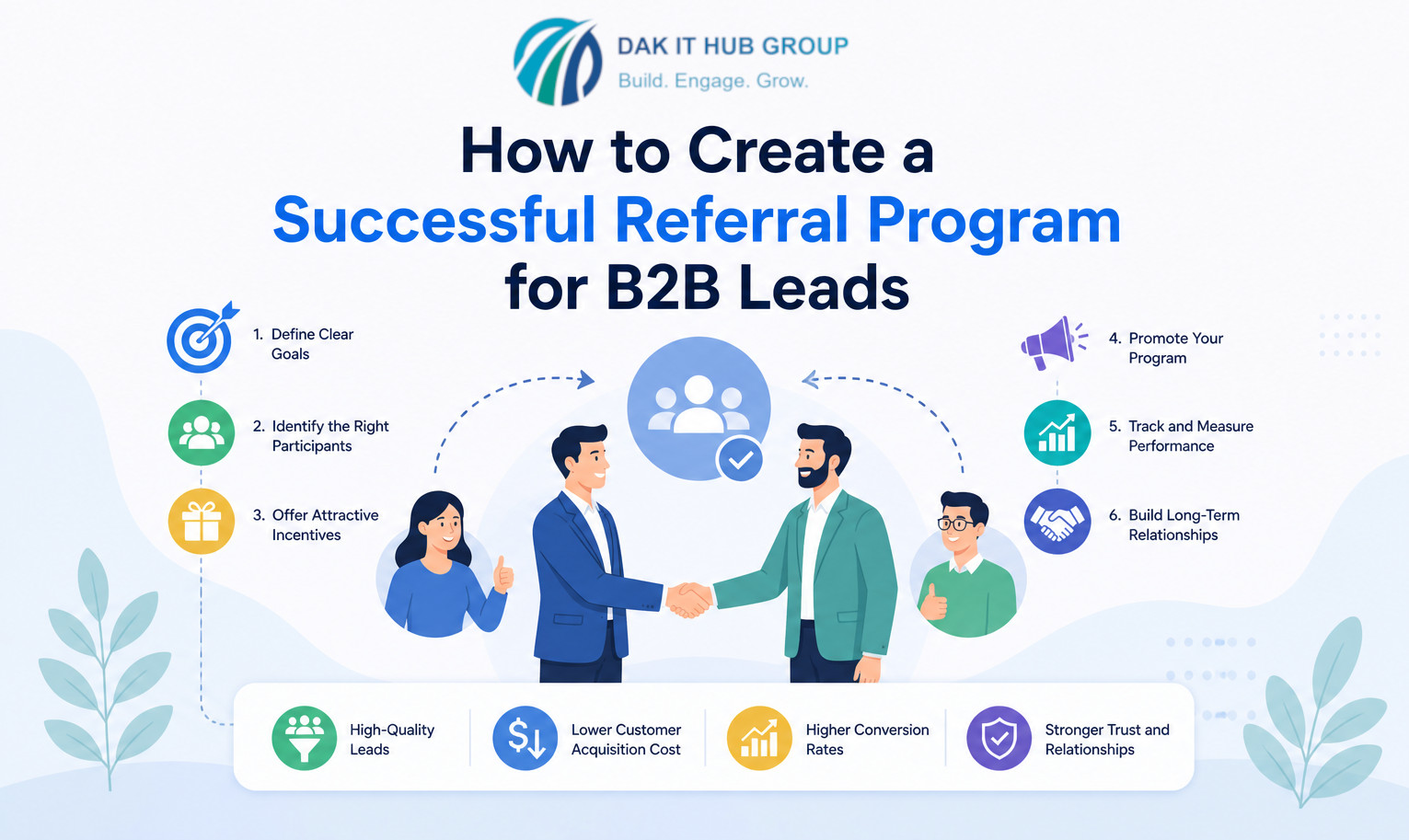
In the B2B marketing, trust plays a major role in decision-making. Businesses are more likely to engage with a company that comes recommended by someone they trust. This is why referral programs are one of the most effective ways to generate high-quality B2B leads.
A well-designed referral program helps companies turn satisfied customers, partners, and even employees into powerful advocates. These advocates can introduce your business to new prospects, often resulting in faster conversions and stronger relationships.
In this blog, we will explore how to create a successful referral program for B2B leads and maximize its impact on your business growth.
Understand the Value of Referral Programs
Referral leads are often more valuable than leads generated through other channels. This is because they come with a level of trust already established.
Some key benefits of referral programs include:
- Higher conversion rates
- Shorter sales cycles
- Better customer retention
- Lower cost of acquisition
When a prospect is referred by a trusted source, they are more likely to engage with your business and move forward in the buying process.
Define Clear Goals and Objectives
Before launching a referral program, it is important to define what you want to achieve. Clear goals help guide your strategy and measure success.
Common objectives include:
- Increasing the number of qualified leads
- Expanding into new markets or industries
- Strengthening relationships with existing customers
- Boosting brand awareness
Having well-defined goals ensures that your referral program aligns with your overall business strategy.
Identify the Right Participants
A successful referral program depends on the people who promote your business. Identify individuals or groups who are most likely to refer high-quality leads.
These may include:
- Existing satisfied customers
- Business partners and vendors
- Industry influencers
- Employees
Focus on individuals who understand your value proposition and have strong networks within your target market.
Create an Attractive Incentive Structure
Incentives play a key role in encouraging participation in a referral program. While B2B referral programs may not always rely on monetary rewards, offering incentives can motivate participants to take action.
Some incentive ideas include:
- Discounts on services
- Gift cards or rewards
- Exclusive access to content or events
- Recognition and appreciation
The incentive should be valuable enough to encourage participation while aligning with your brand and business model.
Make the Process Simple and Transparent
One of the most common reasons referral programs fail is complexity. If the process is difficult to understand or time-consuming, people are less likely to participate.
To ensure success:
- Provide clear instructions on how to refer leads
- Offer easy-to-use referral forms or links
- Clearly explain how rewards are earned
- Keep participants informed about the status of their referrals
A simple and transparent process increases participation and builds trust.
Promote Your Referral Program
Even the best referral program will not succeed if people are not aware of it. Promote your program through multiple channels to reach your audience.
You can use:
- Email campaigns to inform existing customers
- Social media posts to increase visibility
- Website banners and landing pages
- Direct communication through account managers
Consistent promotion ensures that your referral program gains traction.
Track and Measure Performance
To understand the effectiveness of your referral program, it is important to track key metrics.
These may include:
- Number of referrals generated
- Conversion rate of referral leads
- Cost per lead
- Revenue generated from referrals
Analyzing these metrics helps identify areas for improvement and ensures that your program delivers results.
Nurture Referral Leads Effectively
Once a referral is received, it is important to follow up quickly and professionally. Referral leads should be treated with care, as they represent both a new opportunity and a reflection of the person who made the referral.
Best practices include:
- Responding promptly to inquiries
- Personalizing communication
- Understanding the prospect’s needs
- Providing relevant solutions
Effective nurturing increases the chances of converting referral leads into customers.
Build Long-Term Relationships
A referral program should not be a one-time initiative. Building long-term relationships with participants encourages ongoing referrals.
Show appreciation by:
- Thanking participants regularly
- Sharing program success updates
- Offering continuous incentives
- Maintaining open communication
Strong relationships lead to consistent referrals and long-term business growth.
Final Thoughts
A successful referral program can become a powerful source of high-quality B2B leads. By focusing on trust, simplicity, and value, businesses can create programs that drive meaningful results.
From identifying the right participants to offering attractive incentives and tracking performance, every step plays a role in the success of the program.
To further strengthen lead generation efforts, DAK IT HUB GROUP offers specialized B2B lead generation services that help businesses connect with the right prospects. Through a combination of targeted email marketing campaigns and strategic telemarketing outreach, DAK IT HUB GROUP enables sales and marketing professionals to reach decision-makers, nurture leads effectively, and generate consistent B2B opportunities for business growth.



0 Comments