
In today’s competitive B2B environment, building strong relationships with prospects takes time. Decision-makers rarely make immediate purchasing decisions after a single interaction. This is where drip campaigns become a powerful tool in email marketing.
A drip campaign is a series of automated emails sent to prospects over a period of time. These emails are designed to nurture leads, provide valuable information, and guide them through the buying journey. When used effectively, drip campaigns can improve engagement, build trust, and increase conversions.
In this blog, we will explore how businesses can use drip campaigns effectively in B2B email marketing.
What Are Drip Campaigns?
Drip campaigns are pre-planned email sequences that are triggered based on time intervals or user actions. Instead of sending one-off emails, businesses create a series of messages that gradually educate and engage prospects.
For example, after a prospect downloads a whitepaper, they might receive:
- A welcome email with additional resources
- A follow-up email with a related case study
- An email highlighting product benefits
- A final email inviting them for a demo
This structured approach ensures consistent communication with prospects.
Define Clear Goals for Your Campaign
Before creating a drip campaign, it is important to define your objectives. Different campaigns may have different goals, such as:
- Nurturing new leads
- Educating prospects about your solution
- Re-engaging inactive contacts
- Converting leads into customers
Having clear goals helps you design the right content and messaging for your campaign.
Understand Your Audience
Effective drip campaigns are built around a deep understanding of the target audience. Businesses should consider factors such as:
- Industry and business type
- Job roles and responsibilities
- Pain points and challenges
- Stage in the buying journey
For example, a prospect in the early research stage may need educational content, while a decision-maker may prefer case studies and ROI-focused messaging.
Understanding your audience allows you to create relevant and engaging emails.
Segment Your Email List
Segmentation is a key factor in the success of drip campaigns. Instead of sending the same sequence to everyone, divide your audience into groups based on specific criteria.
Common segmentation strategies include:
- Industry-based segmentation
- Role-based segmentation
- Behavioral segmentation
- Engagement level
By sending targeted messages to each segment, businesses can improve engagement and response rates.
Create Valuable and Relevant Content
Content is the foundation of any successful drip campaign. Each email in the sequence should provide value to the recipient.
Some types of content include:
- Educational blogs and guides
- Industry insights and trends
- Case studies and success stories
- Product features and benefits
- Invitations to webinars or demos
The goal is to gradually move the prospect from awareness to consideration and finally to decision-making.
Avoid being overly promotional in the early stages. Focus on building trust first.
Maintain Proper Timing and Frequency
Timing plays a crucial role in drip campaigns. Sending too many emails in a short period can overwhelm prospects, while sending emails too far apart can reduce engagement.
A well-balanced schedule ensures consistent communication without being intrusive.
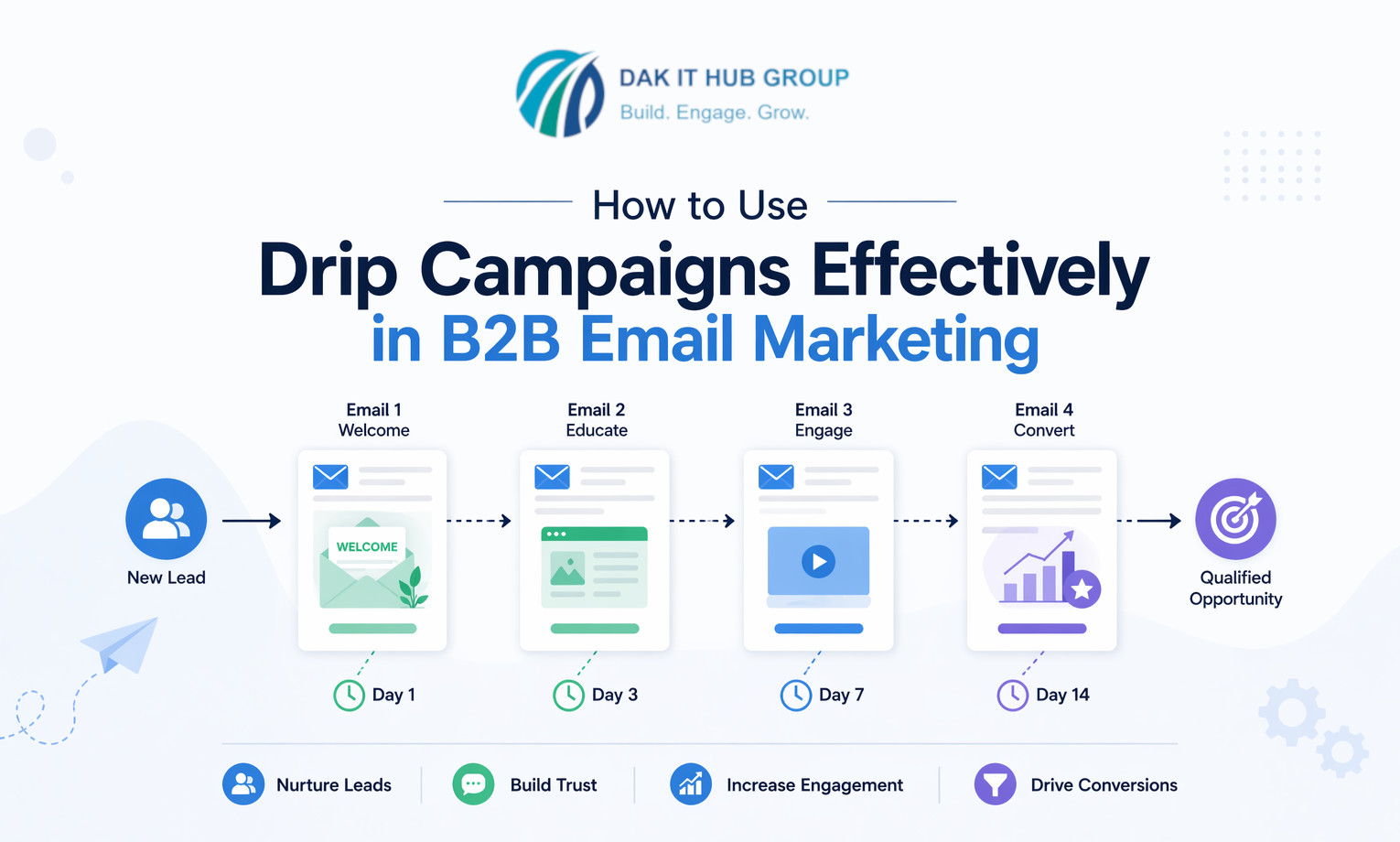
For example:
- Email 1: Immediately after sign-up
- Email 2: 2–3 days later
- Email 3: 4–5 days later
- Email 4: 1 week later
Testing different timing strategies can help determine what works best for your audience.
Personalize Your Emails
Personalization improves the effectiveness of drip campaigns. Simple techniques such as using the recipient’s name or company can make emails feel more relevant.
Advanced personalization can include:
- Tailoring content based on industry
- Recommending resources based on previous interactions
- Sending behavior-based emails
Personalized emails create a stronger connection with prospects and increase engagement.
Include Clear Call-to-Actions (CTAs)
Each email in the drip campaign should have a clear purpose. This is achieved through strong call-to-actions.
Examples of CTAs include:
- “Download the full report”
- “Read the case study”
- “Schedule a demo”
- “Speak with our expert”
CTAs guide prospects toward the next step in their journey.
Track Performance and Optimize
To ensure success, businesses must track the performance of their drip campaigns.
Key metrics to monitor include:
- Open rates
- Click-through rates
- Conversion rates
- Unsubscribe rates
Analyzing these metrics helps identify what is working and what needs improvement.
Continuous optimization ensures better results over time.
Align Drip Campaigns with Sales Efforts
Drip campaigns should work alongside sales teams. When a prospect shows high engagement, the sales team can step in for direct interaction.
For example, if a prospect clicks on multiple emails or downloads several resources, they can be marked as a high-priority lead.
This alignment ensures a smooth transition from marketing to sales.
Final Thoughts
Drip campaigns are an essential part of modern B2B email marketing. They help businesses stay connected with prospects, deliver consistent value, and guide leads through the buying journey.
By focusing on audience segmentation, valuable content, proper timing, and personalization, companies can create drip campaigns that drive real results.
To support these efforts, DAK IT HUB GROUP offers specialized B2B email marketing services that help sales and marketing professionals execute effective drip campaigns through content syndication. By distributing high-quality content to targeted audiences, DAK IT HUB GROUP enables businesses to engage the right prospects, nurture leads efficiently, and generate consistent opportunities for growth.



0 Comments